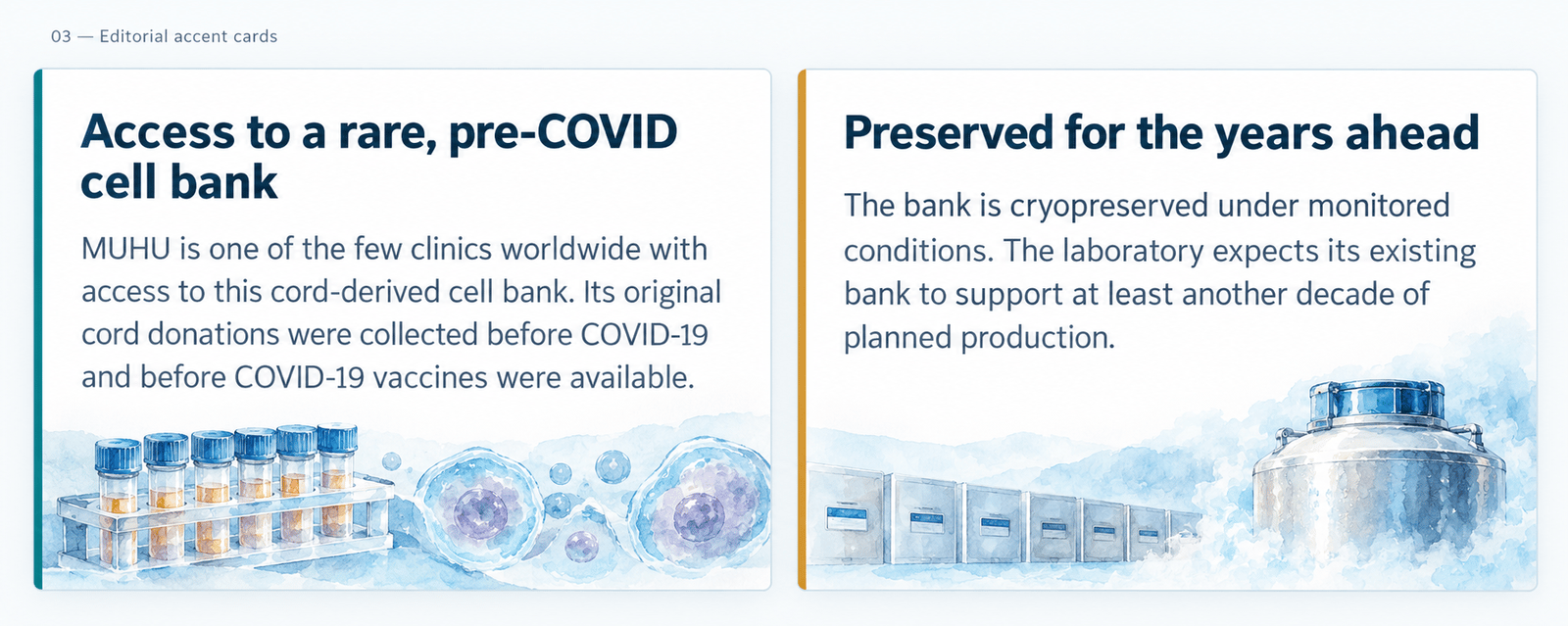
Access to a rare, pre-COVID cell bank
We're unique in that our lab owns this cord-derived cell bank. Its original cord donations were collected before COVID-19 and before COVID-19 vaccines were available.
Understand why a stem-cell option might be considered for your situation, what the proposed treatment involves, and what it would cost. Your medical review comes before your travel plans.

The cells discussed here are mesenchymal stromal cells, or MSCs. They release biological signals that interact with nearby cells.
Researchers study these interactions for their role in inflammation, immune activity and tissue repair. Your clinician connects that science to your diagnosis: what's driving the problem, what the treatment would aim to change, and which evidence supports that approach.
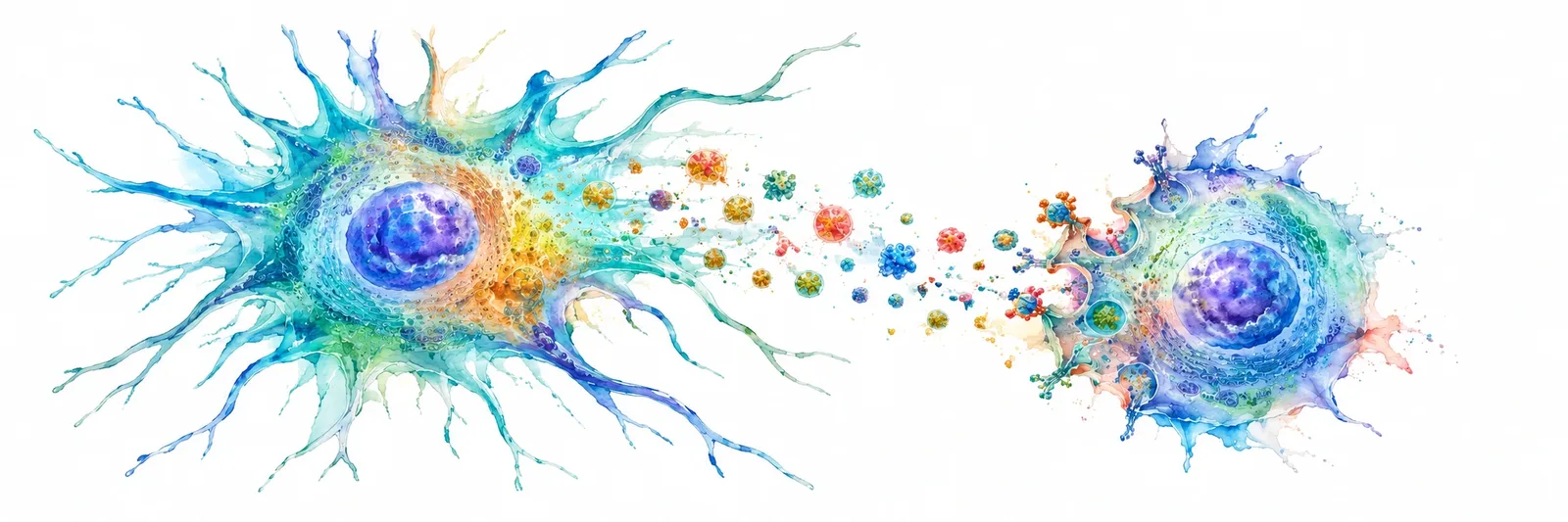

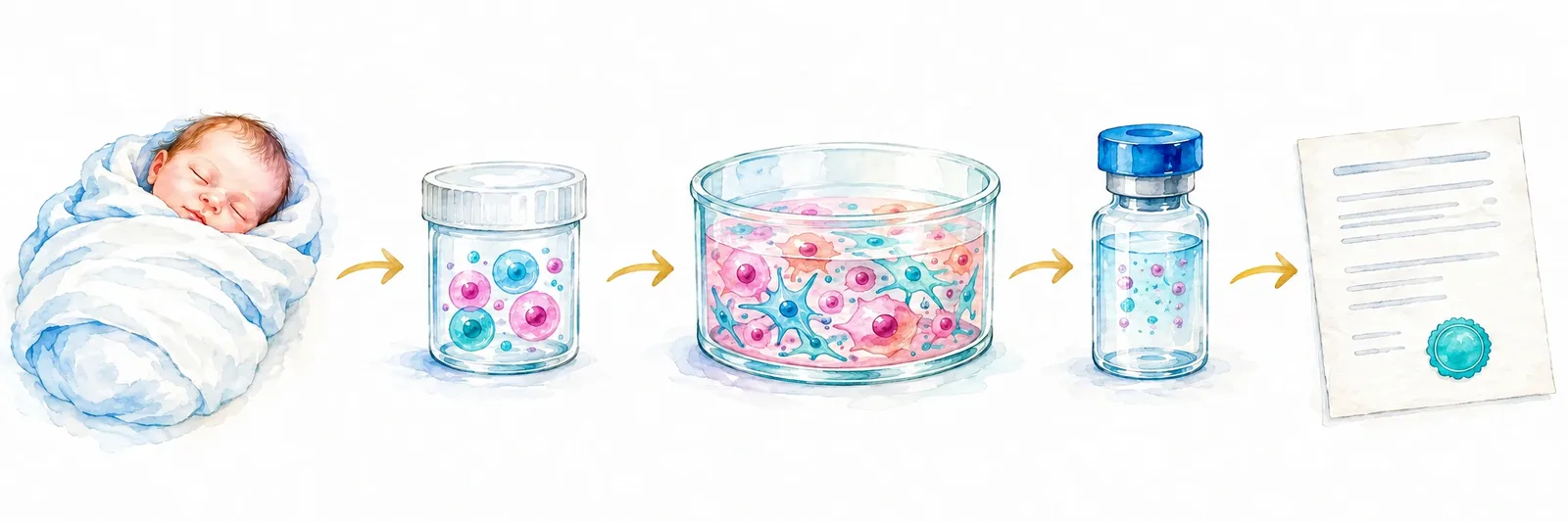
MUHU’s stem-cell approach uses cells from donated umbilical-cord tissue. Cells are collected, grown in controlled culture, and checked before a preparation is considered for care. The source and preparation records stay connected from donation to the proposed treatment.
Our stem-cell preparations originate from donated umbilical cords collected before the COVID-19 pandemic—and before COVID-19 vaccines were available.
We're unique in that our lab owns this cord-derived cell bank. Its original cord donations were collected before COVID-19 and before COVID-19 vaccines were available.
The bank is cryopreserved under monitored conditions. The laboratory expects its existing bank to support at least another decade of planned production.
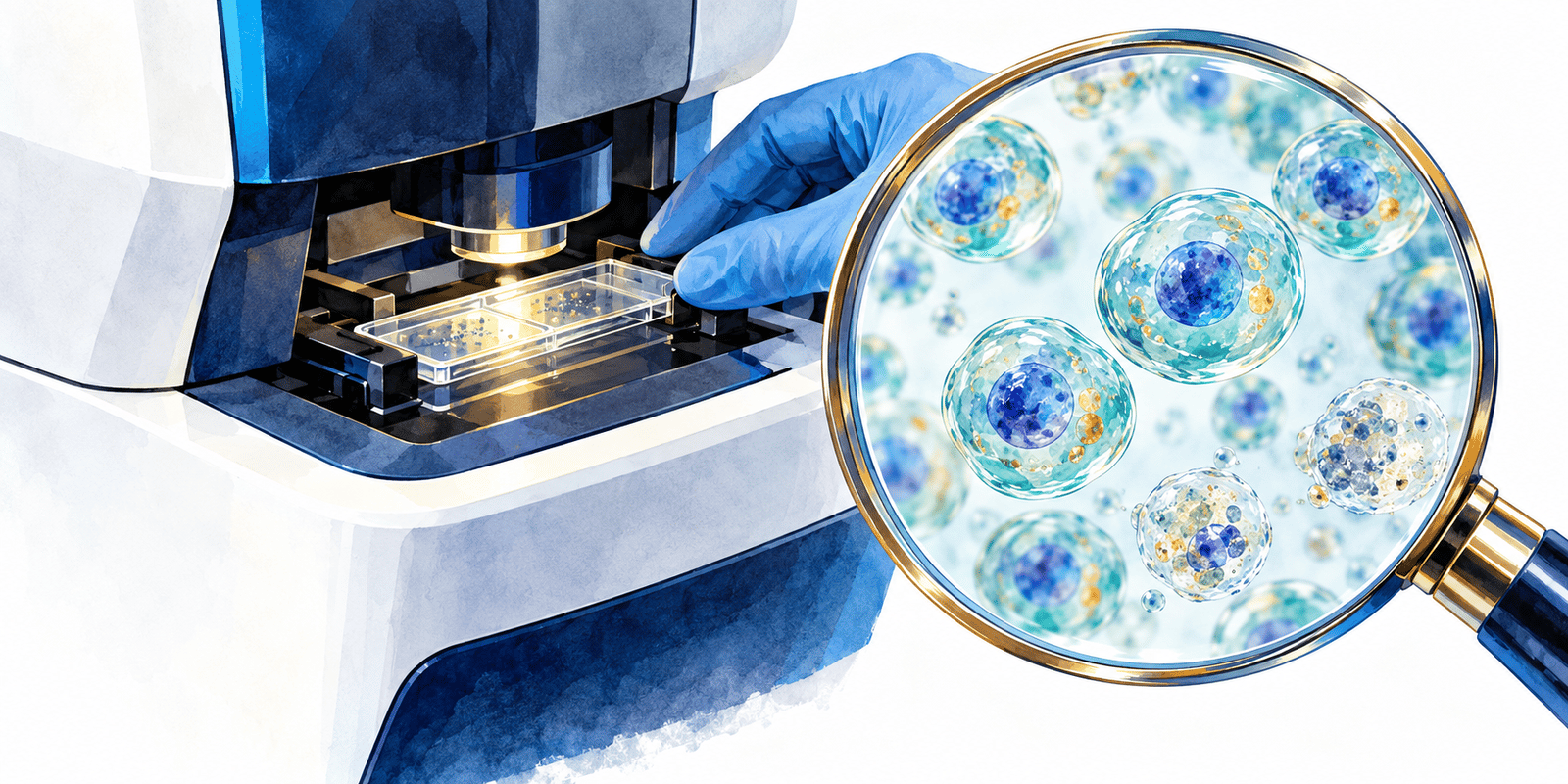
Automated analysis measures and records the number of viable, live cells in the batch prepared for you. As an ISO-certified lab, the process has an exceptional 95% viability standard.
 95%Minimum
The aim is an appropriate living-cell dose for your condition and treatment route. Our medical team draws on relevant research and clinical experience, considering cell quality and delivery alongside quantity.
Stem-cell treatments can use different sources and preparation methods. Some U.S. clinics use cells collected from your own bone marrow or fat.
U.S. law bans clinics from offering lab-expanded donor cord-tissue treatments for joint pain, back pain or adult wellness.
This means that U.S. providers must pool together collected cords with 2-3 million cells each to get to a minimum viable clinical dose of 25 million cells at a very high cost to you. Unfortunately, there are unscrupulous providers who make large claims and then deliver a small dose with zero scientific proof. This is the reason why most Americans travel abroad.
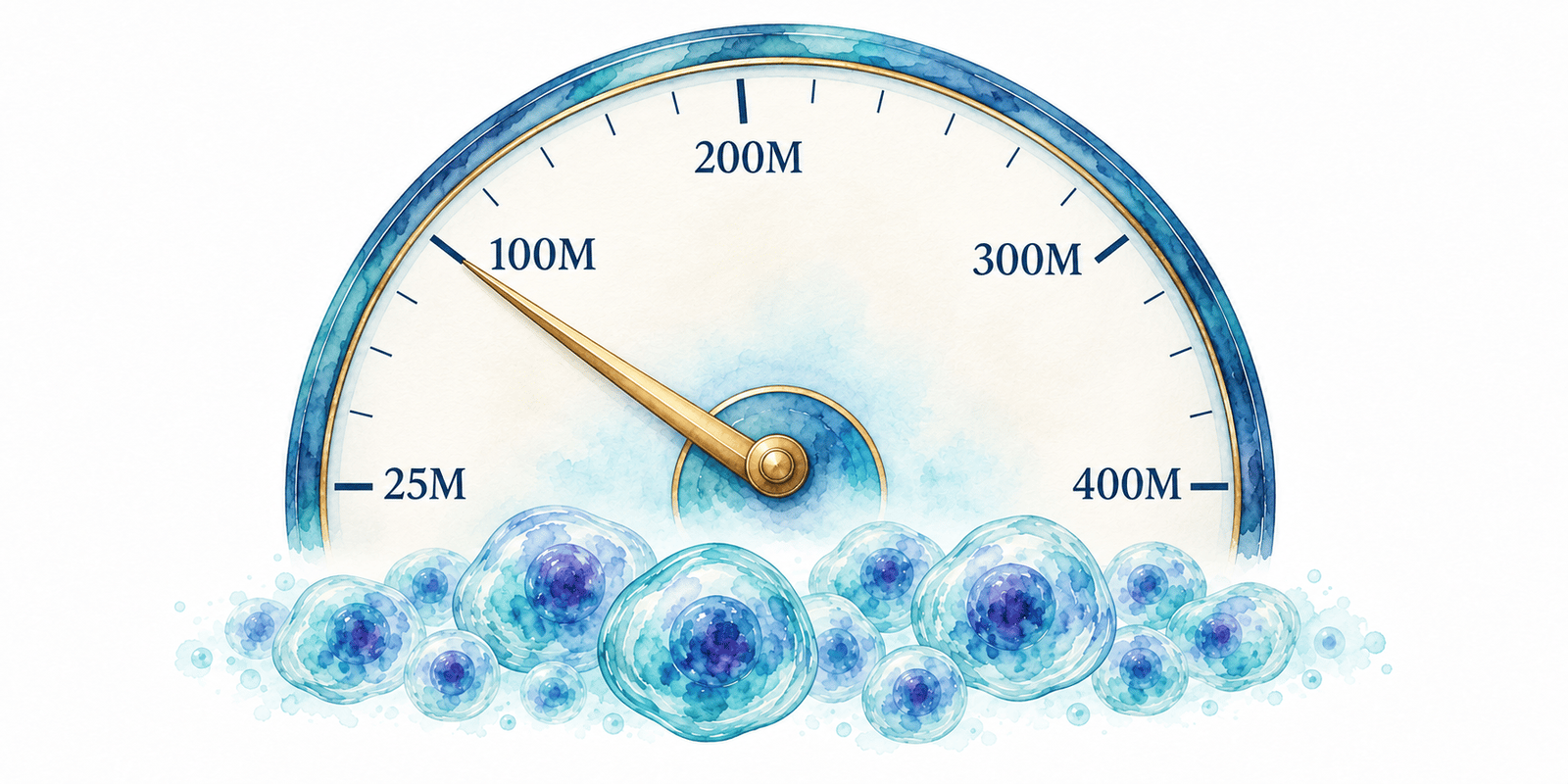
Our lab prepares cells from donated umbilical-cord tissue, collected at birth, and grows them to the amount specified in your treatment plan. That means no bone-marrow or fat-harvesting procedure for you. Based on the science, our minimum cell counts are 25 million for joint, hip, intrapenile and facial applications, and 100 million for IV and spine/intrathecal applications.
Cells originate from donated cord tissue collected at birth.
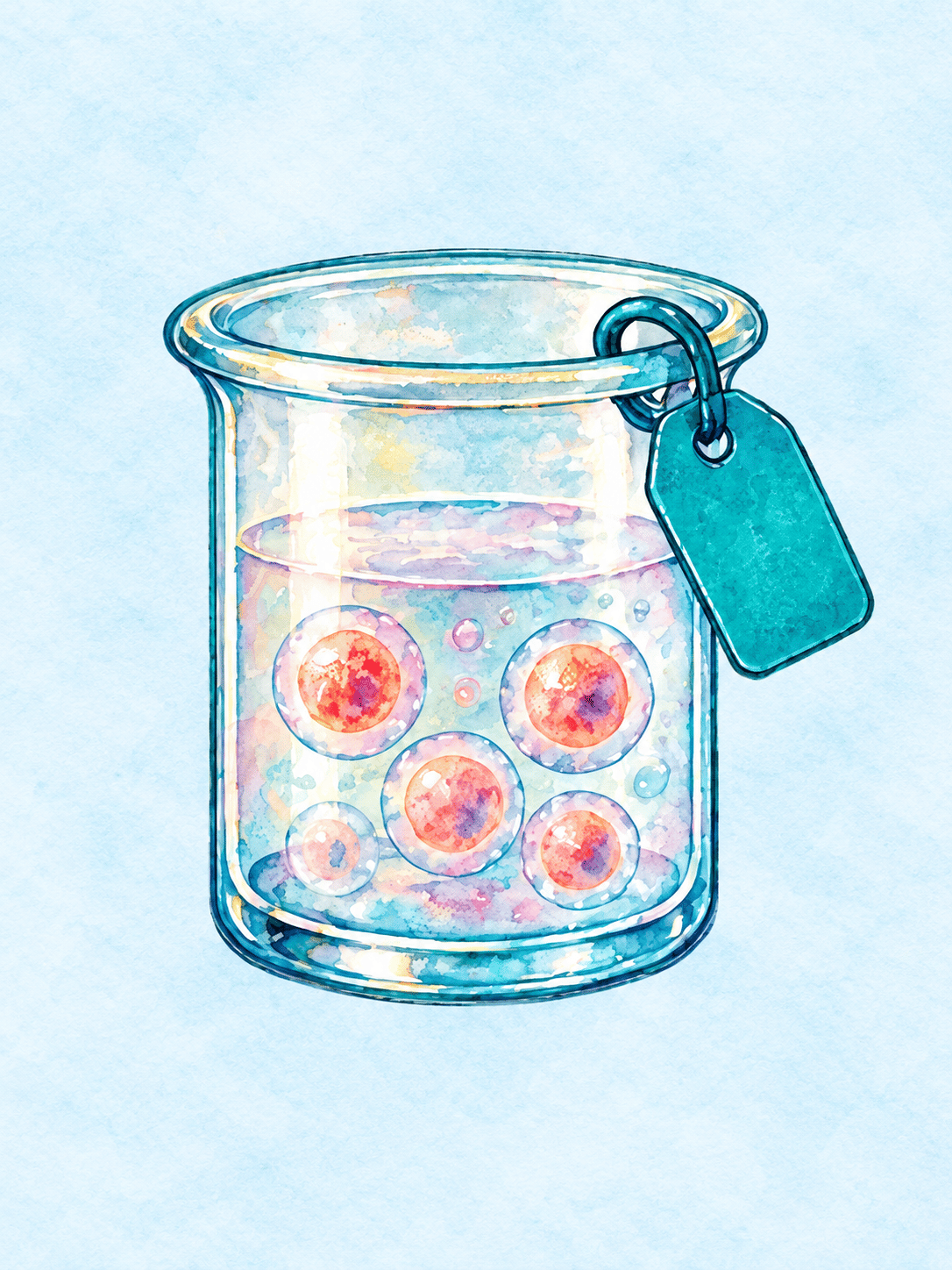
Cells from different donors are never pooled.

The lab grows and prepares the cells based on effective dose research and experience.
Before your visit, our medical team reviews your history, previous care and goals. If treatment is recommended, your plan will identify the cell preparation, administration route, appointments and aftercare.
Intravenous delivery and a targeted local procedure are different clinical choices. Your clinician will explain the route proposed for you, preparation instructions, and what to expect afterward.

Review your history and agree on the best plan.
Receive the care and procedure described in your plan.
Follow your recovery guidance and planned reviews.
Your written proposal brings together IV treatment, stay and support, and any extras you choose, with one total before you travel.
Starting price for IV treatment. Joint injections and other targeted procedures are priced separately.
* Plan for at least 3 to 5 nights; your proposal specifies the room, transfers and support.
Treatment plus stay and support. Optional extras are itemized; flights and personal spending are separate.
Your goals shape your follow-up. Agree what to track and when you’ll review it.

What's difficult today?
What would you like to do more comfortably?
What changed, and what comes next?
Tell us what’s been holding you back. Our medical team will explain the options and prepare a written plan, with the treatment details and full price, for you to consider.
Get A Free Evaluation